CloudCare is the AI orchestration platform that connects the home to the care team — for health systems, payers, and federal health. One elastic platform that compresses the middle, from the enterprise to the home.
Request a DemoThe ER visit. The admission. The readmission. They rarely arrive without warning — a missed reading, a skipped medication, a slow slide no one was watching. CloudCare was built to watch, at scale: to reach patients and members in their homes, catch the drift early, and nudge them back toward health before a manageable condition becomes a hospital bill. Reactive care treats the crisis. CloudCare is built to prevent it.
Chronic disease is climbing while the clinicians to manage it are walking out the door. The in-person model can’t stretch far enough. Care has to go virtual-first — meeting people at home and nudging them into compliance between visits, not just during them.
Federal health is being rebuilt on foundational platforms, open to AI-driven solutions instead of decade-old systems. The money is moving with it — more than $1.5 trillion in initiatives steering the system from volume to outcomes, paying to prevent the expensive event, not just treat it. The agencies moving fastest want a platform to build on, not another tool to bolt on.
AI is the quickest way to close these gaps, and it cuts two ways. It runs on data — so it needs that data cheaply, continuously, and from the real world. No data, no AI. And it’s compressing the middle, stripping out the processes and resources that quietly add cost and delay. Whoever can feed it and clear that middle pulls ahead; whoever can’t, stalls.
When all three expire at once, the old playbook breaks — and the platforms positioned at the intersection win.
CloudCare was designed for exactly this moment: a foundational platform built to absorb change as fast as the market delivers it — so the people closest to the patient can build what care actually needs, without waiting for the middle to catch up.
For years, enterprises pushed the middle of the workflow offshore — more hands, lower cost. In the AI era, the winning criterion isn’t cost. It’s speed: faster response, faster turnaround, faster time from idea to production.
The idea, the program, the outcome you need.
In production, at population scale.
Coders added by the dozen to cut cost. More resources, more handoffs, slower turnaround — optimized for price, not speed.
Business Engineers building on the CloudCare foundational platform with low- and no-code — optimized for speed, response time, and time-to-production.
The middle transforms from coders to business engineers — vision to platform, at the speed AI demands.
At the center is CLOIE™ — the CloudCare Learning Orchestration Interoperability Engine — automating fulfillment, outreach, education, and AI-driven conversations that personalize care in real time.
Three advantages a competitor can’t simply build or buy — the product itself, the patent protection around it, and the partnerships behind it.
CloudCare wasn’t built in a lab — it was forged over five years developing connected care with the VA, then hardened for enterprise and home. The head start shows in capabilities no one ships natively: device-less IVR outreach, end-to-end device logistics, and multi-payor simultaneous routing.
Around the platform sits a portfolio of issued U.S. patents covering core connected-care methods — independently valued and steadily expanding. It’s protection competitors can’t engineer around, and a moat that compounds as the portfolio grows.
CloudCare is developed and carried to market with the partners that matter — federal programs and health systems shaping the product, and technology and channel partners putting it in front of payers, providers, and agencies. Relationships that take years to earn and can’t be shortcut.
One panel for monitoring, alerts, and billing-qualifying events — without building a program from scratch.
Close care gaps and lift Stars while reducing utilization and total cost of care — with the reporting to prove it.
Built for federal-scale connected care — FedRAMP-ready, FISMA-aligned, multi-region.
API-first and FHIR-native — brandable, configurable, ready to extend instead of rebuild.
Connect a device once and reach every payer and provider on the platform — 1,000+ solutions, one integration.
Tech-enabled touchpoints and conversational AI keep people engaged in their care — and improve access to it.
Like a refinery turning one barrel of crude into many fuels, CloudCare turns Patient Generated Health Data into a slate of refined insights. The underlying clinical data is never altered.
A clinician orders a connected solution from inside the electronic health record.
The order routes to CloudCare, which loads the appropriate vendor solution onto the device.
An order is sent to the manufacturer to configure and ship the device to the patient’s home.
Automated communication: your device shipped, it arrived, take your first reading — or, you’ve missed your readings.
The patient takes vital-sign readings and answers survey questions, per the original order.
The same signal means something different depending on the life around it. CloudCare understands each reading in the context of the whole person — not just the clinical value.
Context is what turns a number into understanding — and understanding into the right care.
One Connection. Many Solutions. One barrel, many fuels. One signal, many forms of care — refined, never altered.
From the device in the home to the workflow in the enterprise, CloudCare is built as a single stack — each layer independent, each replaceable, none of them locked to one vendor.
The ingestion tier — cellular, BYOD, hub-based, and deviceless inputs all enter through one interface, so device vendors swap out without touching anything above.
The processing tier — every signal is normalized, tagged, and placed on a common pipeline that downstream services subscribe to, independent of its source.
The deployment tier — a cloud-abstraction layer lets the whole stack run on any major cloud or on-prem, with no code path bound to one provider.
The channel tier — voice/IVR, SMS, app, and email outreach exposed as shared services any module can call, so a channel can be added or changed without rebuilding the program.
The data tier — FHIR R4-native, HIPAA-aligned, federal-grade storage that keeps the source clinical record immutable and portable across environments.
The control tier — CLOIE™ sequences work across every layer above, a single orchestration engine the other tiers plug into rather than depend on.
The 30 days after a hospital stay decide whether a patient comes back. CloudCare carries them from the discharge order into monitored recovery at home — early readings, check-ins, and escalation before a setback becomes a readmission.
The costliest events are the ones seen coming. CloudCare watches the whole panel between visits and surfaces the patient trending the wrong way — turning a rising pattern into an intervention instead of an ER visit.
What proves out at one clinic has to hold at the scale of millions. CloudCare runs the same program from a single site to an entire health system or federal population — reaching even patients with no smartphone or broadband.
CloudCare is inspired by working with health systems, technology partners, and emergency medical providers — currently moving into production with real patients.
Combining proactive monitoring with community-based intervention didn’t just reduce readmissions — it improved equity in how care is delivered, with support tailored to each patient’s needs.
CB Insights’ 2026 digital-health outlook identified five forces reshaping the industry. Most platforms address one or two. CloudCare sits at the intersection of all five — by design, not coincidence.
Consumer wearables move into clinical-grade vital-sign tracking as regulators open the path.
1,000+ device integrations already operational, with a wearable patent portfolio secured ahead of the clinical shift — the orchestration backbone those devices need.
Acquirers pay premiums for proprietary clinical datasets; off-the-shelf algorithms lose their edge.
CLOIE™ generates a longitudinal, population-scale dataset that deepens with every patient interaction — a data moat a competitor can’t buy off the shelf.
The major AI labs race to acquire healthcare infrastructure, lifting valuations for those who hold it.
Already operational inside the Microsoft ecosystem — Fabric and Dragon Copilot — with explainable AI governance built in, not waiting to be discovered.
A structural caregiver shortage forces integrated AI workflows — not point solutions — at scale.
AI triage and prioritization that surface deterioration early, with hospital-to-home and chronic-care workflows validated through years of VA RPM development.
Voice systems move into documentation, access, and care — over $2.6B invested in 2025 alone.
Conversational AI built natively into CLOIE™, plus VIDA — broadband-free voice RPM that reaches rural and underserved populations no app can.
CloudCare isn’t chasing the 2026 trends — it built the infrastructure they require.
The five predictions are from CB Insights’ 2026 digital-health outlook. CB Insights does not endorse or name Life365; the alignment shown reflects Life365’s own analysis of CloudCare’s capabilities against those predictions.
CloudCare is cloud-portable and vendor-neutral by design. Run it on the environment you already operate — Microsoft Azure, AWS, Google Cloud or Oracle — with no single-cloud lock-in, and ingest patient data from every major EHR through open FHIR R4 and HL7 standards. The orchestration layer stays the same wherever it runs.
Every connection uses open standards — HL7, FHIR R4 and REST APIs across EMRs, CRMs, labs, pharmacies and payers — configured low-code with prebuilt connectors and templates. HIPAA & HITECH compliant; FedRAMP-ready on whichever cloud you choose.
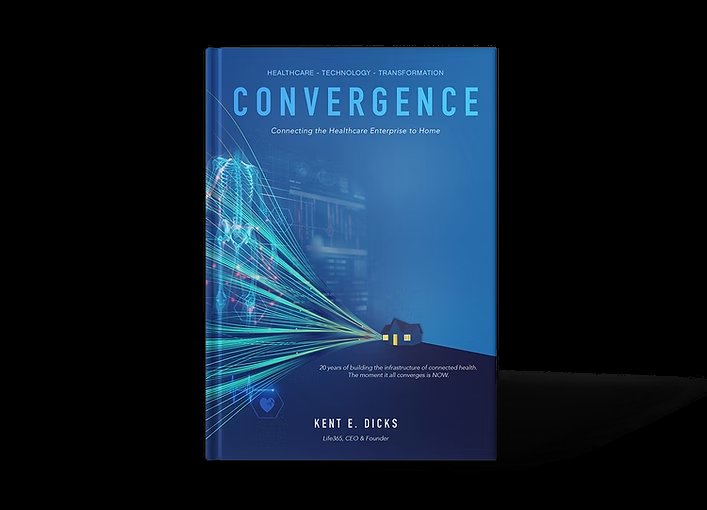
Two decades building toward one conviction: that healthcare would converge — at a single point in time, into one collapsed offering. The Convergence Trilogy is that vision written down. CloudCare is its execution.